Rented
Designing a peer-to-peer rental experience for urban renters
Overview
Most people own tools and gear they use once, then store forever. Rented lets neighbors lend and borrow instead. I served as sole designer across onboarding, browse, PDPs, and profiles, from November 2024 through engineering handoff in February 2025.
Outcome
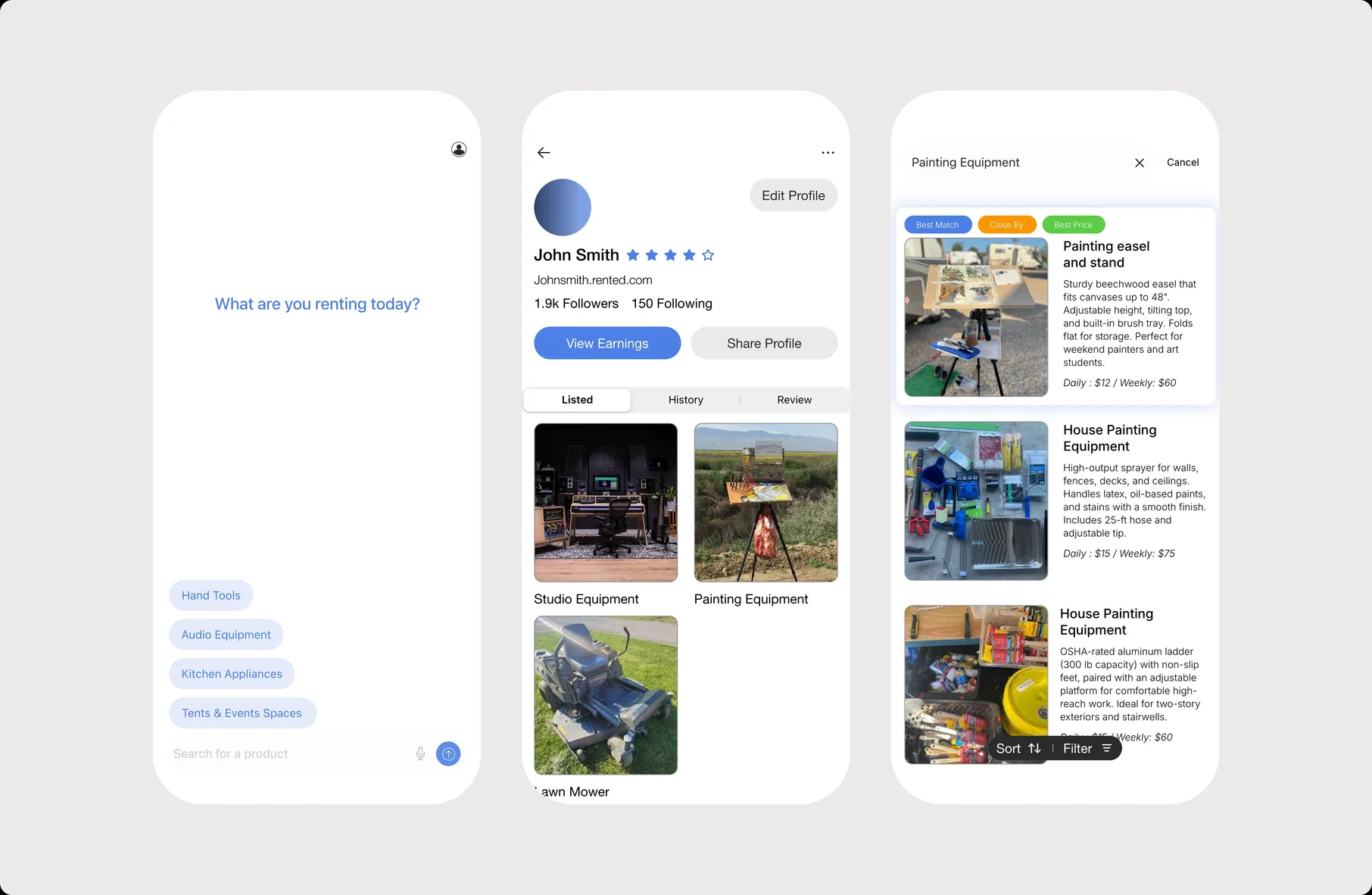
The handoff included 25-30 screens, a component library, annotated flows, and an interactive prototype the engineering team could test on their own devices — praised for the thought behind the UI and how well it translated Rented's goals into something easy to browse and use. Onboarding was the clearest differentiator: two to three steps and immediate verification, landing between Hygglo's failure-prone checks and Craigslist's lack of trust infrastructure entirely. In Round 2 testing, all three returning participants engaged with the new “Best Match” section first, validating it as the fix for the drop-off seen in Round 1. Build paused when engineering reprioritized, but the project sharpened my approach to friction-free trust-building and browse experiences that hold up across unrelated inventory.
Problem
Existing P2P rental apps get onboarding, role flexibility, and browsing wrong. Hygglo over-verifies, Craigslist under-verifies, no platform handles renter/lister duality, and browsing chaotic categories.
Research
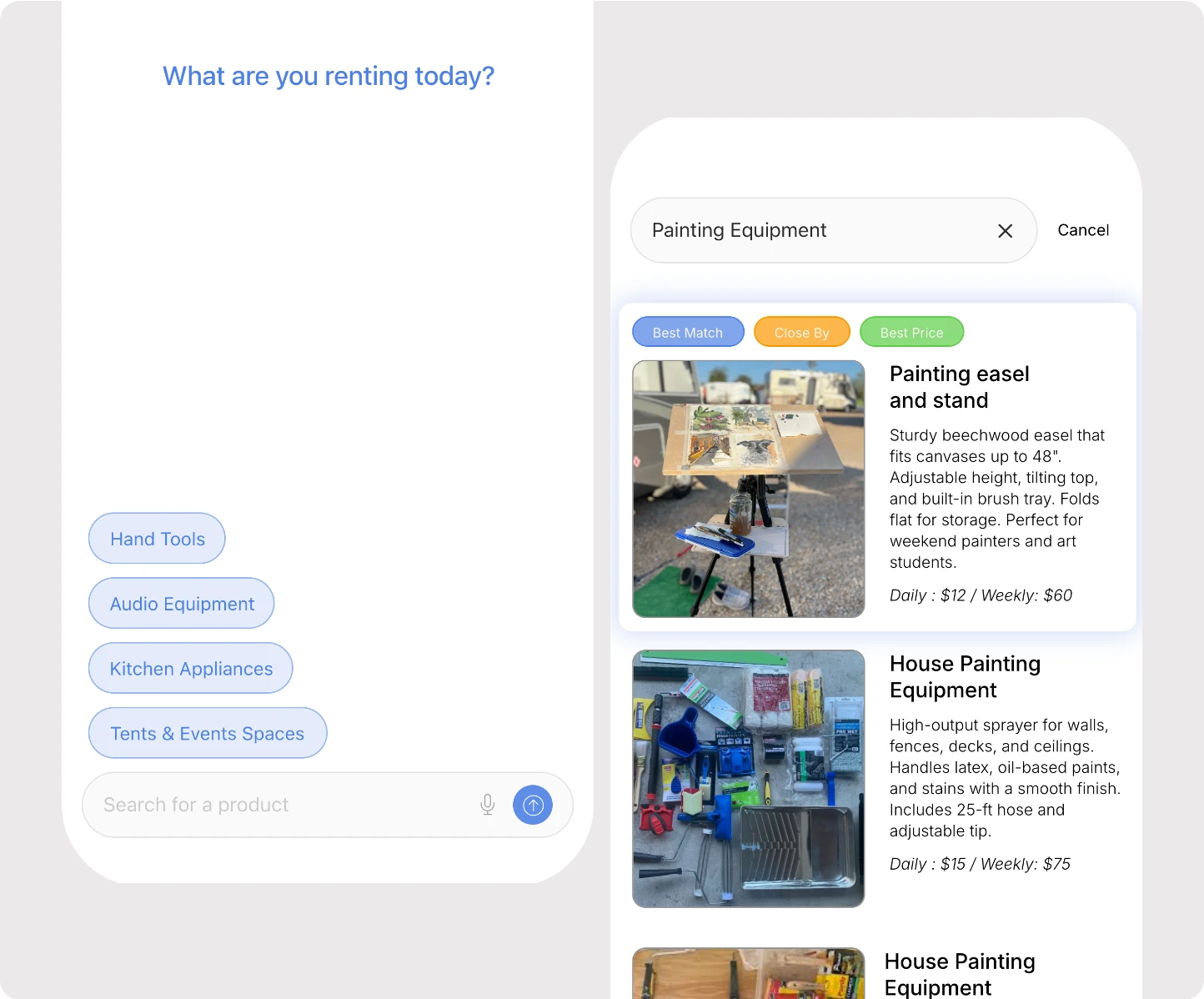
Two rounds of comparative sessions — Round 1 with 4 participants, Round 2 with 3 of the same on a revised prototype — walked users from familiar resale apps (eBay, Grailed, Depop) through competitors to an early Rented prototype. Three patterns held: minimal search won (Depop users cited its simplicity), role-switching was universal (every participant saw themselves as both lister and renter, yet every competitor forced one or the other), and long catalogs caused drop-off (users wanted “something at the top that’s actually for me”).
Design Decisions
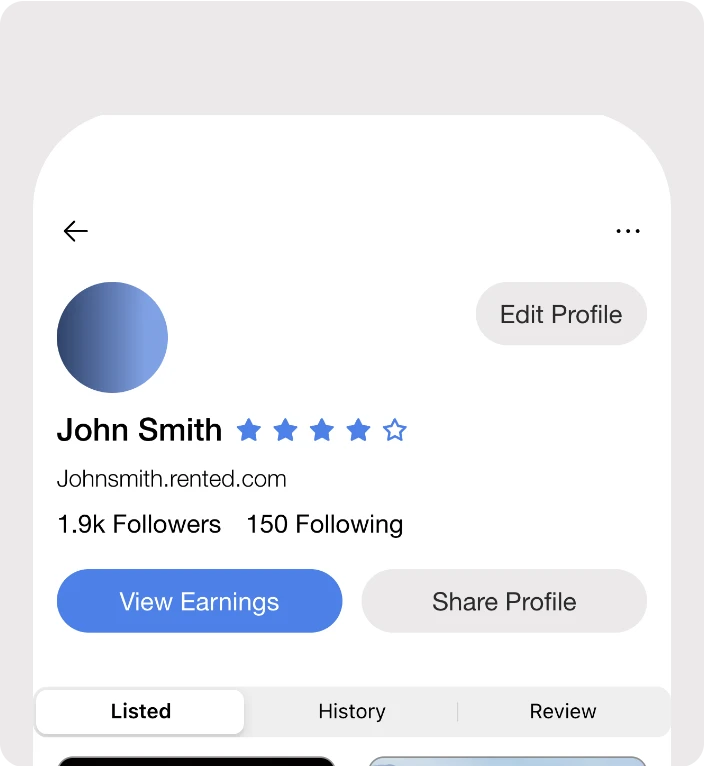
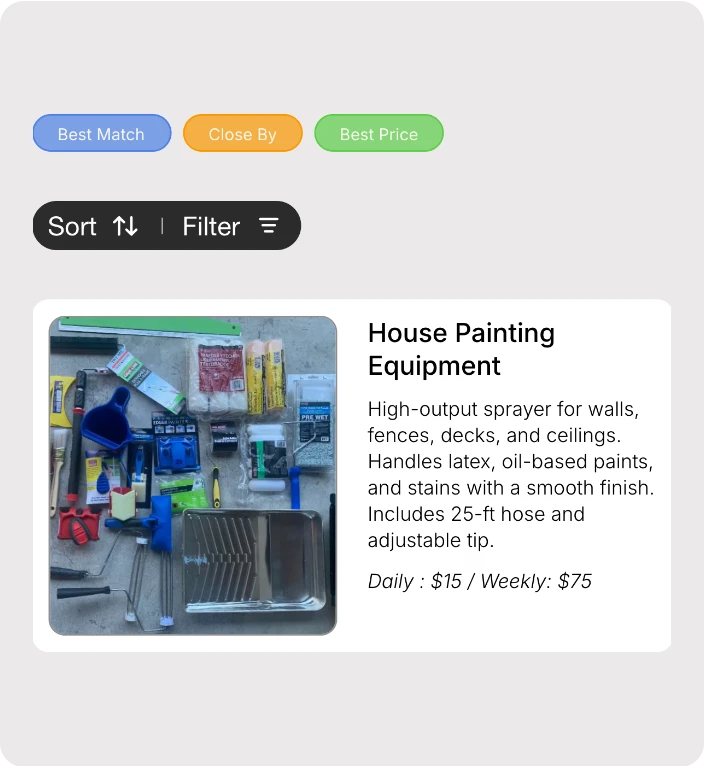
Onboarding leads with SSO and a single category prompt, getting users browse-ready in under a minute with no verification wall, while profiles use a tabbed layout that treats renter and lister roles equally and surface trust signals right at the decision point on the PDP. Browse changed most between rounds — Round 2 added a “Best Match” section (driven by Round 1 drop-off, and the top engagement point in every session) and suggestion tags above search that outperformed direct text input. Filtering across mixed inventory, like a drill versus a tent, remained unresolved.